Satwa Roundabout: The Beating Heart of Old Dubai
In a city defined by rapid transformation, Al Satwa’s famous roundabout endures as a rare constant — a gathering point where communities, cuisines, and decades of Dubai history intersect at every hour of the day.
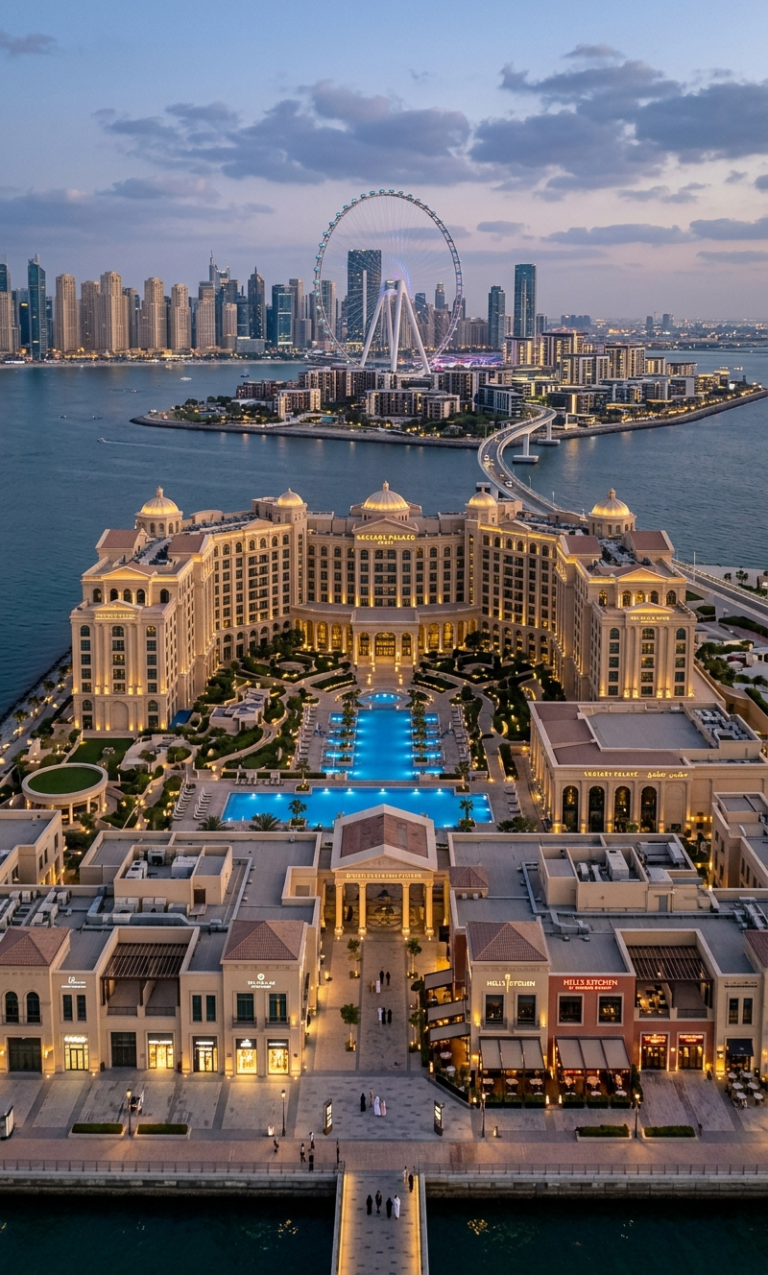
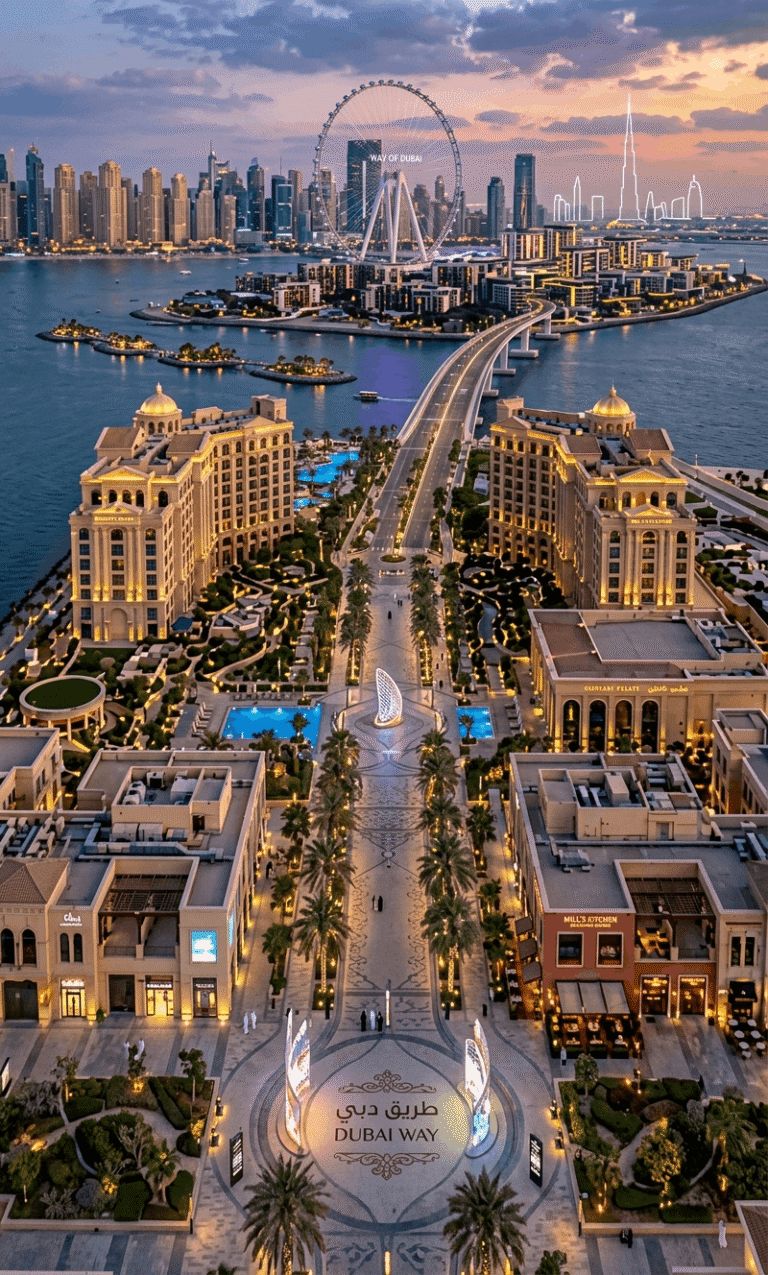
Illustrated aerial view of Satwa Roundabout — a meeting point of eight roads and a dozen communities · Dubai Daily Press
There are places in Dubai that tourists rarely find on their itineraries, yet every long-time resident holds them close. Satwa Roundabout is one such place. Tucked between the gleaming towers of Sheikh Zayed Road and the old villas of Jumeirah, the roundabout sits at the gravitational centre of Al Satwa — one of Dubai’s oldest, most diverse, and most culturally layered neighbourhoods.
Walk here at any time of day and you will find something different. At sunrise, the roads are quiet, and the scent of fresh bread drifts from a Lebanese bakery that has been opening its shutters before anyone else is awake. By noon the pavements hum with workers from across South Asia and the Levant, weaving between parked cars, small tailoring shops, and the kind of hole-in-the-wall restaurants that serve the best biriyani you will eat in the city. By midnight, the streets are alive again — a second wind that this neighbourhood seems to find every single night.
“Satwa doesn’t perform for you. It simply exists, as it has for decades, and it asks only that you slow down long enough to notice.”
Dubai Daily Press · June 2026A Neighbourhood That Predates the Skyline
Al Satwa’s roots stretch back to the 1960s and 1970s, when Dubai was beginning its first wave of planned development. Long before the skyscrapers of Downtown or the manufactured beaches of Jumeirah consumed the landscape, Satwa was already a functioning, breathing community. Indian merchants, Pakistani craftsmen, Filipino nurses, and Arab families all made their homes here, and that original diversity never really left.
The roundabout itself became the neighbourhood’s natural focal point — the place where roads from Bur Dubai, Sheikh Zayed Road, and the older Jumeirah quarters all converged. Unlike the engineered plazas and malls that define newer parts of the city, this gathering point grew organically. A flower stall here, a car tyre shop there, a Filipino supermarket tucked beside a Yemeni restaurant. The roundabout didn’t plan to become a landmark. It just did.
- Location Al Satwa, Dubai — near Sheikh Zayed Road interchange
- Metro World Trade Centre Metro (Red Line) · 10–12 min walk
- Best time Early morning or after 9 pm for the full atmosphere
- Known for Street food, tailoring shops, Filipino groceries, plant nurseries
- Parking Side streets off 2nd December Street
- Vibe Old Dubai, multicultural, unhurried, authentic
The Street Food That Defines the Area
If there is one undisputed reason to visit Satwa, it is the food. The area around the roundabout is home to one of the most concentrated collections of affordable, outstanding restaurants in all of Dubai. Shawarma is the obvious starting point — the chicken shawarma served in the small stands on Satwa Road has been benchmarked against every other version in the city by countless residents, and it consistently wins.
But the food story of Satwa is broader than shawarma. Pakistani karahi joints serve slow-cooked meat dishes in the kind of portions designed to feed a table of eight. Sri Lankan rice and curry restaurants offer colour and complexity for under twenty dirhams. Filipino bakeries sell pan de sal and ensaymada alongside Filipino-style spaghetti that regulars travel across the city to find. There are Yemeni honey shops, Iranian bakeries turning out thin, sesame-dusted flatbreads, and Indian sweet shops where a box of mithai is bought by weight.
The streets around Satwa Roundabout come alive after dark — restaurants, groceries, and flower stalls light up the neighbourhood every night of the week.
The Tailoring Lanes of Satwa
Few visitors to Dubai know that the city has a neighbourhood where you can walk into a small shop, choose fabric from a roll, and have a bespoke suit or dress made within 48 hours for a fraction of what it would cost elsewhere. That neighbourhood is Satwa, and the tailoring trade here is serious business.
The tailor shops are clustered on the streets immediately off the roundabout, many of them occupying the same premises they have held for thirty years or more. Master tailors from India and Sri Lanka, many of whom trained in the finest ateliers of their home cities, have built decades-long clienteles here. Diplomats, airline crew, longtime expats, and savvy tourists all know to come to Satwa when they need something made properly.
Al Satwa’s tailoring district is home to over 60 independent tailors operating within a few blocks of the roundabout. Many have been in business since the 1980s, making it one of the longest-running craft communities in the city. Prices for a bespoke shirt start at around AED 80–120, and a full suit from AED 400–600 depending on fabric.
Plants, Pets, and the Satwa Nurseries
One of the neighbourhood’s best-kept secrets is its collection of plant nurseries. Running along the edge of the area nearest to Sheikh Zayed Road, these open-air nurseries sell everything from towering date palms to tiny succulent arrangements, at prices that make the garden centres of Jumeirah look faintly absurd by comparison.
Friday mornings at the Satwa plant market have become a ritual for a certain type of Dubai resident — the ones who know that buying a monstera here costs a third of what it would cost at a branded store in a mall. The nursery owners, predominantly from Kerala and Tamil Nadu, have built a community knowledge that runs deep: they can advise on exactly which plants will survive a Dubai summer on an east-facing balcony, which soil mixes work best in the heat, and which flowering varieties will bloom despite the humidity of August.
Why Satwa Still Matters
In a city that has developed a reputation — not always unfairly — for favouring the new over the old, Al Satwa represents something quietly radical: a place that has been allowed, more or less, to remain itself. There have been redevelopment pressures over the years, and the neighbourhood’s character has shifted at the edges, but the essential DNA of the place — its diversity, its affordability, its refusal to perform for the tourist gaze — has held.
Coming here requires a slight recalibration if you have spent your Dubai days in the Marina or Downtown. The footpaths are narrower. The signage is in a dozen languages at once. The traffic around the roundabout never quite obeys any logic you can identify. But stay for an hour, eat a meal that costs less than a taxi ride across town, and let the neighbourhood’s rhythms find you — and you will understand why, for so many people, Satwa is not just a place on a map, but a reminder of what cities, at their best, can be.
“Satwa’s roundabout is not a landmark you visit once. It is a place you return to, each time finding it exactly as you left it, and somehow different.”
Dubai Daily Press · Culture DeskGetting There
The nearest Metro station is World Trade Centre on the Red Line, about a 10 to 12 minute walk. Taxis and ride apps will drop you directly at the roundabout. If you are driving, parking is available on the side streets off 2nd December Street — arrive before 7 pm on weekends if you want to find a spot without circling the block. The area is best experienced on foot; wear comfortable shoes and give yourself at least two hours.